
Introduction
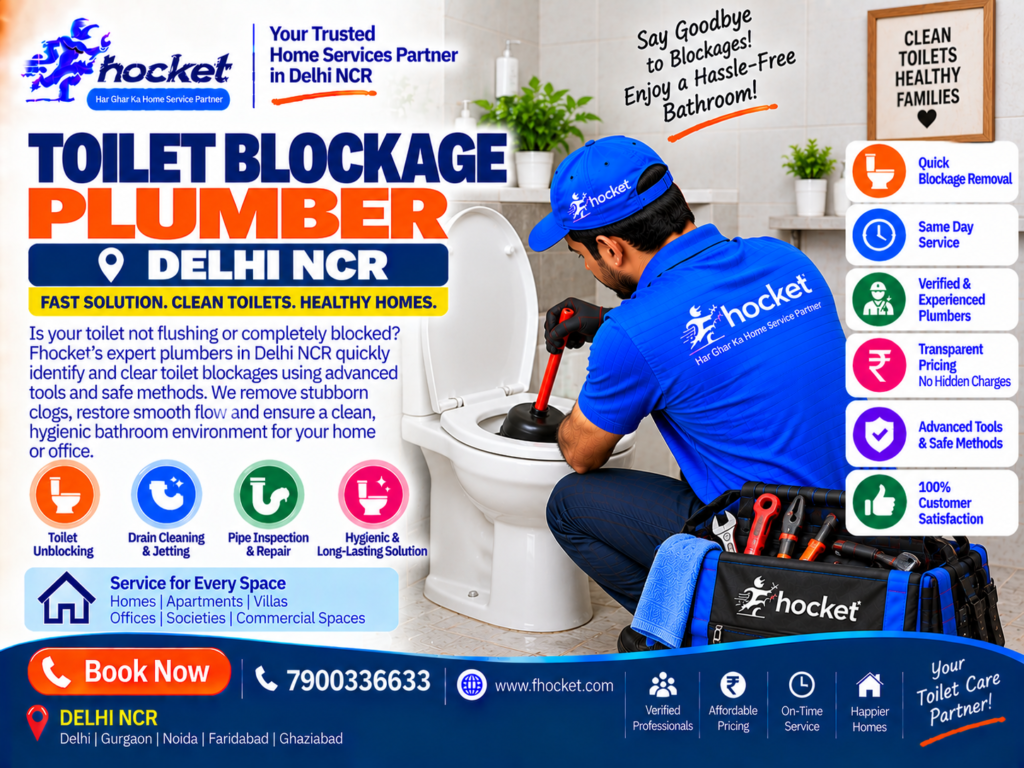
A blocked toilet may interfere with the everyday routine of a home and might cause water to accumulate in the bowl, drain slowly or overflow. The culprit behind the clog could be too much toilet paper, foreign items, a buildup of waste, or an issue lower down the drain line. If the bowl is already full, don ‘t flush again and over and you will make an overflow. A plumber in Delhi NCR who deals with toilet obstructions can assess the symptoms and advise on the proper method to clear the blockage. If the toilet is draining slowly, is blocked completely or is backing up into another outlet, please let us know on Fhocket if you need help. Please note any previous attempts made to clear and confirm time of visit, inspection process and charges before any work is carried out. Keep children and pets out of the contaminated water and clean up affected surfaces safely.
When Should You Call a Toilet Clogger Plumber in Delhi NCR
A toilet clog could be an easy fix like a temporary stoppage or a more complex problem farther down the drainage system. You can describe the situation by looking at the symptoms, and prevent activities that may make it worse.
Toilet that is slow to drain
If it takes longer than usual to empty, you may have partial blockage. Record if the water level returns to normal or remains high.
Garbage or water back up
Water backing up into the toilet or a floor drain next to it may be a symptom of a larger drainage problem. Do not use the affected fixtures and do not allow anyone to use the contaminated water.
Gurgling sounds from the sewers nearby
If the drainage pipe is restricted, air can travel through and that can generate gurgling or bubbling. Also determine if you hear the sound while flushing or when another fixture discharges water.
The return of the block
If the toilet is still clogged after being cleansed, the problem may be further down the pipe or the system may be clogged with materials not suitable for flushing. Tell the plumber what you did to try to clear the problem previously and how fast the problem occurred again.
Call Fhocket and tell them what the problem is with your toilet and if any other drains are affected. Note if anything has been purged. Don’t use many chemical cleaning before examination.
Fhocket also provides various home services to address the everyday needs of the household. Carpenter, Electrician, Pest Control, AC Repair and Appliance Repair are among them.
Clearing Your Toilet Blockage: What a Plumber Will Do
The best technique to eliminate the obstruction depends on its location and severity. A plumber can look at the toilet and any drain lines you can reach, and tell you what he proposes to do before he starts.
Evaluating the Bowl and Flushing Symptoms
The plumber can check water level, the flush motion and if the bowl drains at all. They could also wonder how long the obstruction has been there and whether anything strange has been flushed down.
How to utilize a right plunger?
Some blockages can be cleared with a toilet plunger intended for the fixture. The plumber can use it cautiously so as not to splash contaminated water and damage the toilet.
Using the Right Tools to Clear a Clog
If a plunger doesn’t work, you might have to get out a toilet auger or some other plumbing tool. The equipment must be suitable for the toilet and the obstruction; do not force improper materials into the drain since they may cause damage.
Perhaps you have a more serious drainage problem
If the toilet is still clogged, or if other drains near the toilet are affected, the blockage may be farther down a common line. The toilet may be the source, or it may be something more systemic. Further inquiry may be needed.
Later testing of the toilet
After clearing the blockage, the plumber may check the flush to determine if the bowl returns to its normal level. If the water begins to rise again or drains out slowly, more tests may be necessary.
Confirming job and fees
Ask before you agree to do the task what the inspection and clearing charges cover. See whether there are any other charges for additional equipment, spare parts or subsequent drainage inspections.
How to Avoid Clogs in Your Home Toilet
Careful use of the toilet can help reduce the risk of blockages and make drainage problems easier to resolve. These habits won’t fix every plumbing problem, but they can help prevent unnecessary obstructions.
Flush only flushable items
Toilet is for human waste and toilet paper only. Place wipes, sanitary items, cotton buds, dental floss and other unsuitable materials in a waste container.
Don’t use a lot of toilet paper
Too much toilet paper can produce a clog, particularly if the toilet isn’t draining efficiently from the beginning. Use sparingly, monitor for flushing changes.
Stop a clogged toilet from flushing
If the water rises in the bowl or the bowl does not flush, do not flush again. The constant flushing causes water to overflow and spray hazardous water all over the bathroom.
React to early warning signs
Look for slow drainage, unusual water levels or constant gurgling. If symptoms return, schedule an inspection instead of repeatedly trying to flush the toilet.
Keeping the toilet clean
Keep children and pets away from any overrunning water. If there is a leak of wastewater, wear the required PPE and disinfect the damaged surfaces according to the product directions.
Get help with serious or stubborn blockages
If the blockage returns, affects drains nearby, or can’t be cleared using proper simple methods, then professional inspection may be needed. If you need help mention the symptoms and what you have tried to clear.
Fhocket can also help households find alternative home services for their daily needs. These include Carpenter, Electrician, Pest Control, AC Repair, and Appliance Repair.
Frequently asked questions
Q1. What is a toilet obstruction normally comprised of?
Possible causes include too much toilet paper, wipes, sanitary products and other improper things or a blockage farther down the drainage system.
Q2. If the toilet bowl is full of water?
Don’t flush again. Allow the water level to settle. But if the toilet still doesn’t flush, ask for help.
Q3. Can you unblock a toilet using a plunger?
Some obstructions can be cleared with a toilet plunger. Use cautiously to prevent spilling and discontinue use if blockage worsens.
Q4. Can you put chemical drain cleaning in a toilet?
Use with caution according to the product guidelines. DO NOT MIX CLEANERS. Inform the plumber if you have already used a chemical product.
Q5. Why does my toilet keep clogging?
A blockage may recur if there is a recurring buildup or blockage in the drain line. In addition, unfit products can lead to a recurrent obstruction. It may have to be looked at further.
Q6. Will a blocked toilet affect other drains?
Yes. If other fixtures or floor drains in surrounding areas also back up, the problem may be a common drainage line.
Q7. What if the water comes back up a floor drain?
If possible, avoid damaged fixtures and keep people out of hazardous water. Have a professional come out and see what is causing your drainage issue.
Q8. What do I have to inform you When I book in a plumber?
Tell me the symptoms, when they started, if any other drains are impacted and if anything has gone down the toilet (objects/goods).
Q9. What should I check before the work starts?
Ask about inspection and clearing charges, recommended approach and if any equipment, parts or drainage checks may cost extra.
Q10. How can I avoid toilet blockages?
Flush only acceptable materials. If the water is rising or draining slowly, do not flush additional toilet paper or flush repeatedly.